
Stop Attending. Start Hosting. The Counterintuitive Cure for the Solopreneur Slump.
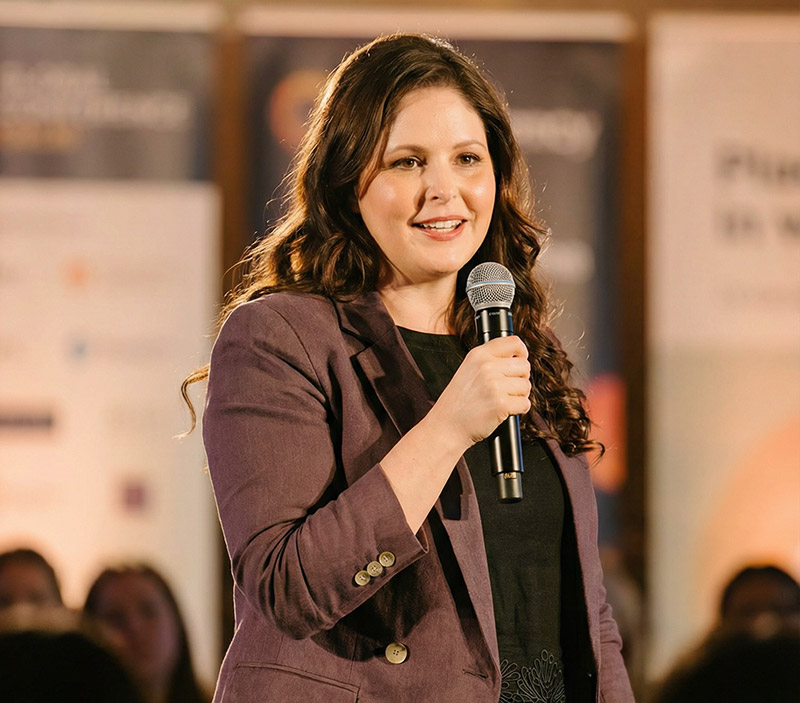
A guest post for Founders Cafe by Lisa of Murder Mystery Guide
You opened your laptop this morning with a slightly heavier feeling than you’d like to admit.
Not because the business is failing — by most measures, it’s working. The clients are paying. The pipeline is reasonable. The work is fine. But there’s a particular quietness to the solopreneur life that nobody warned you about. The meeting you took alone. The win you celebrated alone. The WhatsApp group where you’re mostly talking to yourself.
And here’s the part that confuses most founders: you’ve done the work. You’ve joined the communities. You go to the breakfasts. You show up to the mixers, the co-working sessions, the panels. You’re in the room.
And yet the feeling persists.
There’s a reason — and it has nothing to do with the events failing or your network being too small. The reason is that being in the room and being part of a circle are two different things, and most solopreneurs never make the move from the first to the second.
The solopreneurs who escape the slow grey fade of founder isolation aren’t the ones with the fullest calendars. They’re the ones who host. Not big things. Not expensive things. Small, regular, slightly unusual gatherings that they convened, that their guests remember, and that — quietly, over months — assemble into the thing they actually needed in the first place: a circle of people who know them by name.
This is the part most solopreneurs miss. Attending an event makes you one of the crowd. Hosting one makes you the centre of a small universe. Seth Godin would call it building a tribe. Robert Cialdini would call it the most ethical use of the reciprocity principle ever invented. I call it the only reliable cure I’ve found for the loneliness tax that quietly compounds every quarter you don’t pay it.
And before you stop reading because hosting sounds exhausting — I know. That’s the second thing nobody tells solopreneurs: the reason you don’t host isn’t that you don’t want to. It’s that the format options on offer are terrible. Dinner parties demand you cook. Drinks demand you carry the conversation. “Let’s all just get together” demands someone be the social engine for three hours, and you already do that for your clients all week.
So here’s what this piece is actually about: a counterintuitive thesis (the cure for solopreneur isolation is to stop attending and start hosting), the real cost of not doing so (your nervous system, your strategic thinking, and your business model all pay the loneliness tax — and the bill comes due eventually), and a hosting format that solves the “but I don’t want to be the social engine” problem, because the format does the work for you.
Let’s start with the cost.
What the Loneliness Tax Actually Charges You
The trouble with the solopreneur version of loneliness is that it doesn’t announce itself. It doesn’t show up as a sad evening or a clear thought of I’m lonely. It disguises itself as other things, which is why it goes unpaid for so long.
It shows up as the strategic decision you sit on for three weeks because there’s no one to talk it through with — and by the time you finally make it, the moment has passed.
It shows up as your pricing, which hasn’t moved in eighteen months because you have no peer benchmark, only your own anxious arithmetic at midnight.
It shows up as the slow shrinking of your risk tolerance — because alone in your own head, the worst-case scenario is always the loudest voice in the room, and there’s no one across the table to say “that’s not actually likely.”
It shows up as the Sunday-night dread, which everyone in employment thinks they invented, but founders know is a hundred times worse when Monday is just you, again, talking to yourself in your home office.
And — most insidiously — it shows up in your body. The research on this is no longer in dispute. Chronic social isolation produces measurable changes in cortisol regulation, sleep architecture, and immune response. The much-cited meta-analysis from Julianne Holt-Lunstad at Brigham Young University put the mortality impact of prolonged loneliness in the same range as smoking fifteen cigarettes a day. The founder grinding solo at their kitchen counter is, biologically speaking, doing themselves an injury that compounds at interest.
Here is the part the Sunday self-help articles miss.
The cost of the loneliness tax isn’t only personal. It’s strategic. Your business is downstream of your nervous system. A founder running on chronic isolation makes more defensive decisions, prices below confidence, pursues fewer brave ideas, and tolerates less ambiguity. The lonely solopreneur isn’t just lonely. They are quietly running a smaller version of the business they could be running.
Rory Sutherland has spent a career pointing out that when the only tool you trust is the spreadsheet, every problem starts to look spreadsheet-shaped. Most founders try to fix their slumps with the tools of business — a new marketing tactic, a new productivity system, a course on focus. But the actual diagnosis sits upstream of any of that. You are a social mammal who has accidentally engineered your own solitary confinement, and no funnel optimisation in the world is going to undo it.
The good news — and this is where the rest of this piece goes — is that the antidote is much smaller than you think. It isn’t a retreat. It isn’t a coach. It isn’t another mastermind. It’s a dinner table, six chairs, and a single decision: that this time, you are the one who put the invitation out.
Why Hosting Beats Attending (And It Isn’t Even Close)
Attending an event is a transactional act. You arrive, you orbit the room, you collect business cards, you leave a little disappointed because the conversations stayed in shallow water. Most attended events deliver the appearance of connection — proximity to other humans, in a room with snacks — without the substance.
Hosting an event is an entirely different psychological transaction. When you are the convenor, four things happen that don’t happen when you attend.
The first is what Cialdini called the reciprocity principle, scaled. Every guest in your room owes you, in a small but real way, for an evening they enjoyed. They will remember you the next time they have an introduction to make, a referral to give, a job to recommend someone for. Not because they are calculating — because they are human, and reciprocity is the oldest social contract there is.
The second is what Seth Godin has been writing about for two decades: tribes.
A tribe doesn’t form because a group of people share interests. It forms because someone convenes a group of people around a shared interest. The convenor is the tribe leader by definition. You don’t have to ask for the role; the act of hosting confers it.
The third is what Gary Vaynerchuk talks about endlessly and most founders ignore: relationships are the only durable asset in business. Marketing tactics will change. Platforms will rise and fall. The Facebook ad pixel that fed your funnel for five years will quietly stop working one Tuesday. But the twelve people who came to your gathering last March and had one of the best evenings of their year — they’re still here, and they’re going to be here in 2030.
The fourth is something none of those thinkers names directly, but every solopreneur who has ever hosted recognises immediately. You feel different the next day. Not just socially refreshed — strategically refreshed. The brain that was stuck in a loop on Tuesday is, on Wednesday morning, somehow looser, more generous, more willing to make decisions. There is no productivity system that delivers that effect. Hosting does.
The objection most solopreneurs raise at this point is: Yes, but I don’t know who to invite. This is rarely the real problem. The real problem is the format. Most founders quietly believe that if they invite people, those people will arrive at the door, sit down, and stare at them expectantly, waiting to be entertained. And — to be fair to the fear — that is what happens at most under-designed events.
The solution is not to be a better social engine. The solution is to choose a format that removes the requirement to be a social engine at all.
The Format That Does the Work for You
Most hosting formats fail solopreneurs for the same reason. They put the host in charge of energy management. The dinner party host has to cook, plate, refill, and steer the conversation. The drinks host has to keep introducing strangers and rescuing dying chats. The “let’s all get together” host has to entertain.
What you actually need is a format with three properties.
It needs to give every guest a clear role, so nobody is sitting silently waiting to be drawn in. It needs to give the evening a shape, so the conversation has somewhere to go without you steering it. And it needs to be strange enough that it overrides the default polite small talk that turns most adult gatherings into a low hum of weather and weekend plans.
This is what I do for a living, which is why I am — at this point in the article — going to argue a position I am unembarrassed about. I run Murder Mystery Guide, and over the past fifteen years I have watched hundreds of adults walk into a room as polite strangers or distant acquaintances and walk out, three hours later, as a group with a shared story. It is the closest thing I have found to a bonding shortcut, and I think solopreneurs are exactly the audience that needs it most.
Here is why it works, in the language of the principles above. A murder mystery dinner gives every guest a character — so the introvert in your circle isn’t required to be themselves, which is liberating. It gives the evening a structure of acts, accusations, alliances, and a reveal — so the host doesn’t need to keep the energy going; the format does. And it is strange enough that nobody is going to lapse back into “so what do you do?” because they’re too busy pretending to be a diamond mine heiress with three secrets and a motive.
There are three ways to do this, depending on your appetite and budget.
The lowest-friction option is a Print & Play kit. You download it, you print the character cards and host instructions, you invite eight to twenty-four people, you follow a simple guide on the night, and you take all the credit. Cost: less than a decent dinner for two. Effort: an afternoon of light prep. This is the option I recommend to solopreneurs who want to test the hosting habit without committing to anything elaborate.
The done-for-you option is a bespoke hosted event. My team creates a custom story tailored to your guests, your venue and a context that tickles your fancy — and we host it. You show up as one of the suspects. This is what to choose when the stakes of the evening matter — a milestone birthday, a client appreciation night, a partner gathering you want talked about for the next year.
And for the founder who’d rather learn the craft and host repeatedly over time, there’s the DIY Murder Mystery Ebook, which is the playbook I’d hand a younger version of myself if I were starting again.
The Smallest Possible First Step
If you’ve read this far, you don’t need to be convinced of the diagnosis. You need permission to take a step small enough that you’ll actually take it.
So here is the step.
Pick eight people. Not twelve. Not the entire WhatsApp group. Six. Pick a date eight weeks out, far enough that nobody’s calendar has a real excuse. Send one message. Not a poll, not a “would you be interested in maybe sometime” — a single, declarative invitation. “I’m hosting a murder mystery dinner on Saturday the 17th. You’re in.”
That is the entire intervention. The cost is the price of a kit and the bottle of wine you would have drunk alone anyway. The return is a roomful of people who, on Monday, will remember that you were the one who put the evening together — and a version of you, on Sunday morning, who has paid down a little of the loneliness tax that was quietly bankrupting the rest of your business.
There is a particular kind of solopreneur who reads articles like this, nods, and bookmarks them for a future quarter that never quite arrives. Don’t be that solopreneur. The compounding works in both directions — every quarter you wait, the tax goes up.
Pick eight people. Pick the date. Send the message.
The cure for the slump was always going to be the thing you were most reluctant to do.
About the author
Lisa is the founder of Murder Mystery Guide, where she has spent fifteen years designing the kind of evenings that turn polite strangers into people who actually call each other afterwards. She writes about play, hosting, and the social science of dinner parties at murdermysteryguide.com/blog.